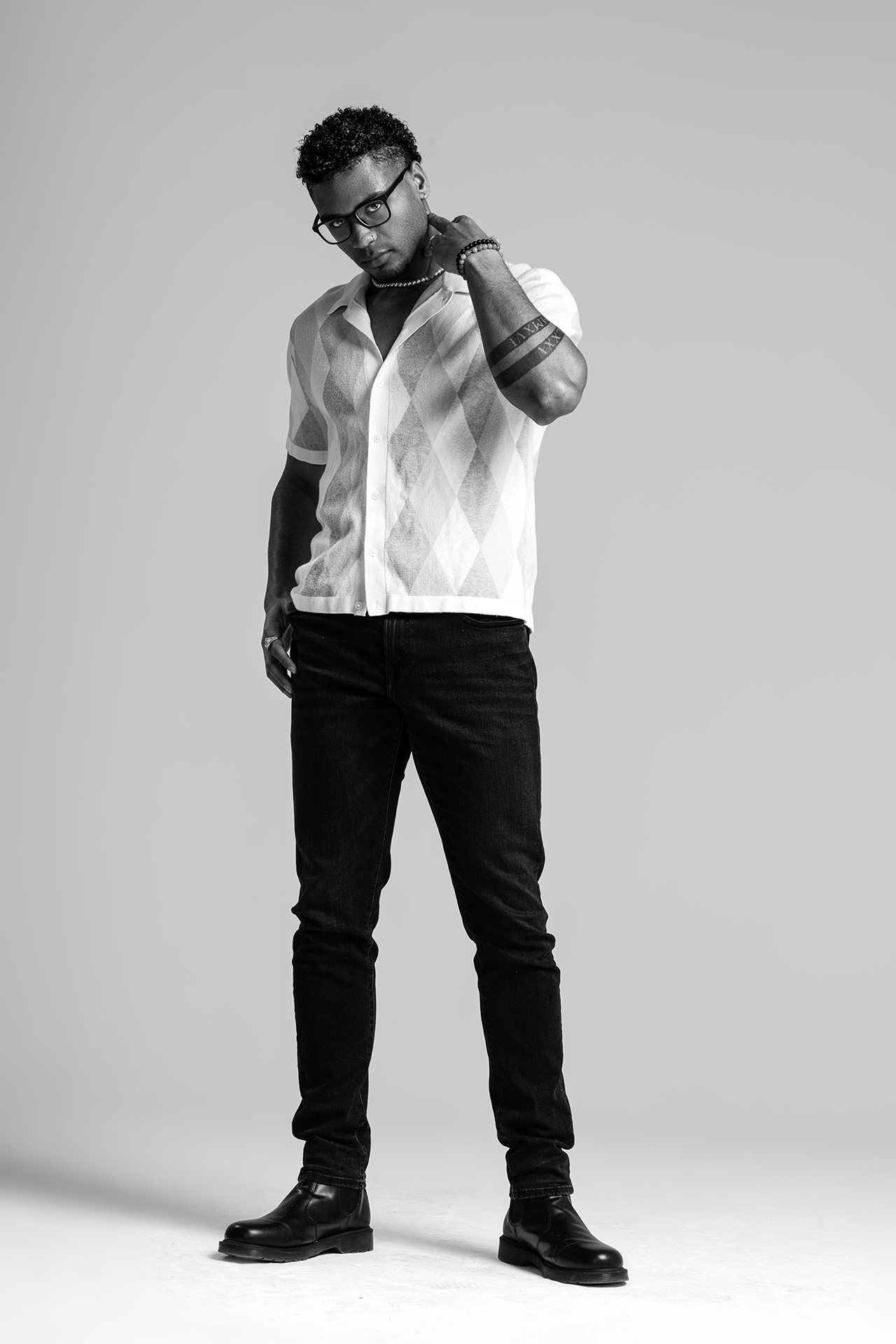
Model resources — Denver & Aurora, Colorado
What to expect at a
comp card shoot
A straight answer, not a listicle — what actually happens before, during, and after.
Model Development
01The point of the card
Most comp card guides read like they were written by someone who's never actually shot one. They'll tell you to bring twelve outfits, book four hours, and "express your personality." None of that is what an agency or client is looking at when your card lands on their desk.
A comp card has one job: let someone who's never met you figure out, in about four seconds, whether you're right for the job they're casting. That's it. Not your personality. Not your range as an artist. Whether you match a brief. Everything about the shoot should serve that one goal, and most of the fluff advice out there works against it.
You're not booking a portfolio shoot. You're booking a reference document. Treat it like one.
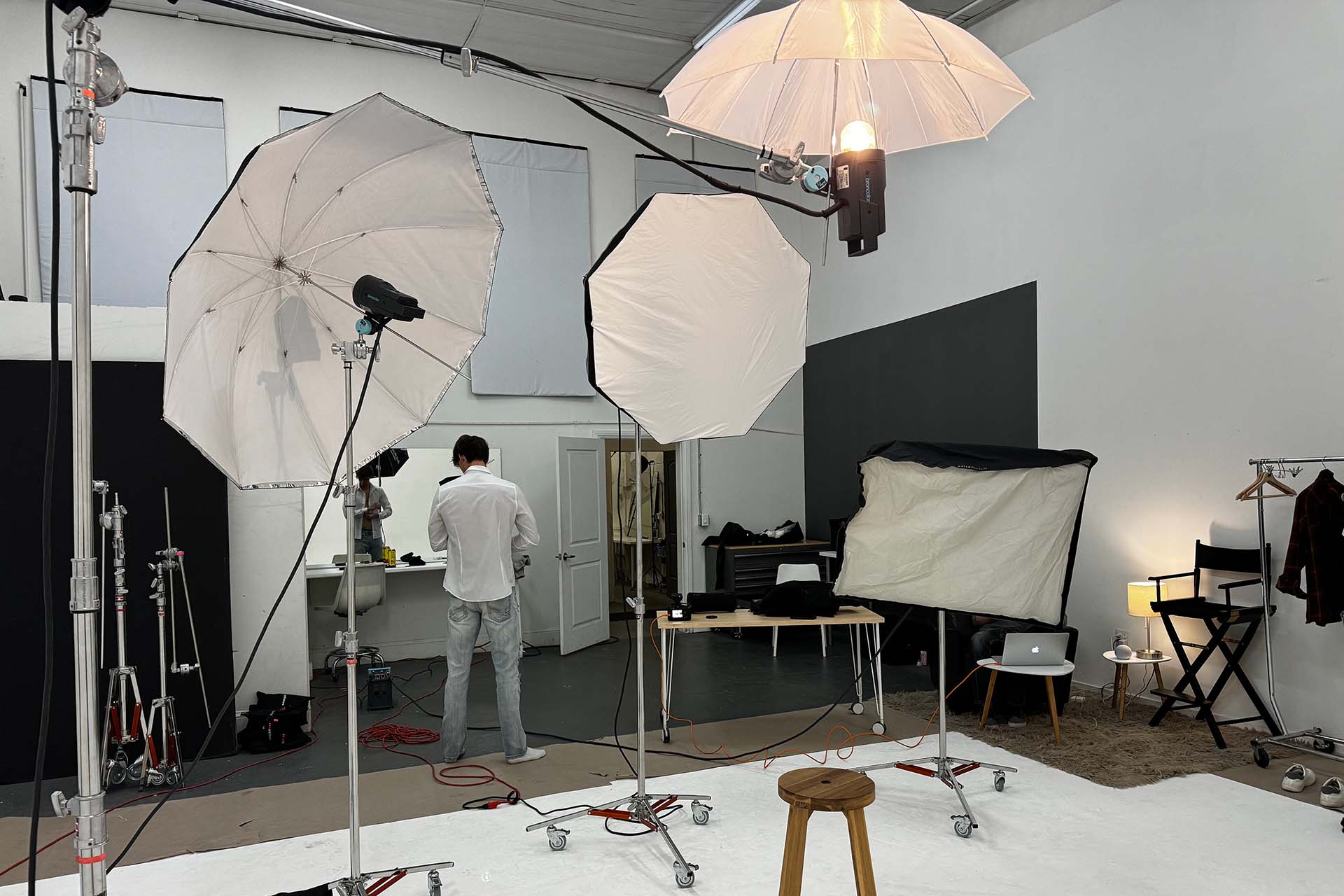
Flat, even lighting — set up for accuracy, not mood
02What to actually bring
- Your real measurements, memorized — height, bust/chest, waist, hips, shoe size, whatever your agency requires. Guessing on the day slows everyone down.
- 2–3 simple, solid-color outfits. Patterns and logos read as noise on a card, not personality.
- Skin-tone-matching, seamless undergarments.
- A friend or family member, if you want one there. Always fine by me.
Skip the full glam unless your agency specifically asked for it. A comp card shows your actual face. If a client books you off the card and you show up looking like a different person, that's not a good first impression — it's a liability, for both of us.
03During the shoot
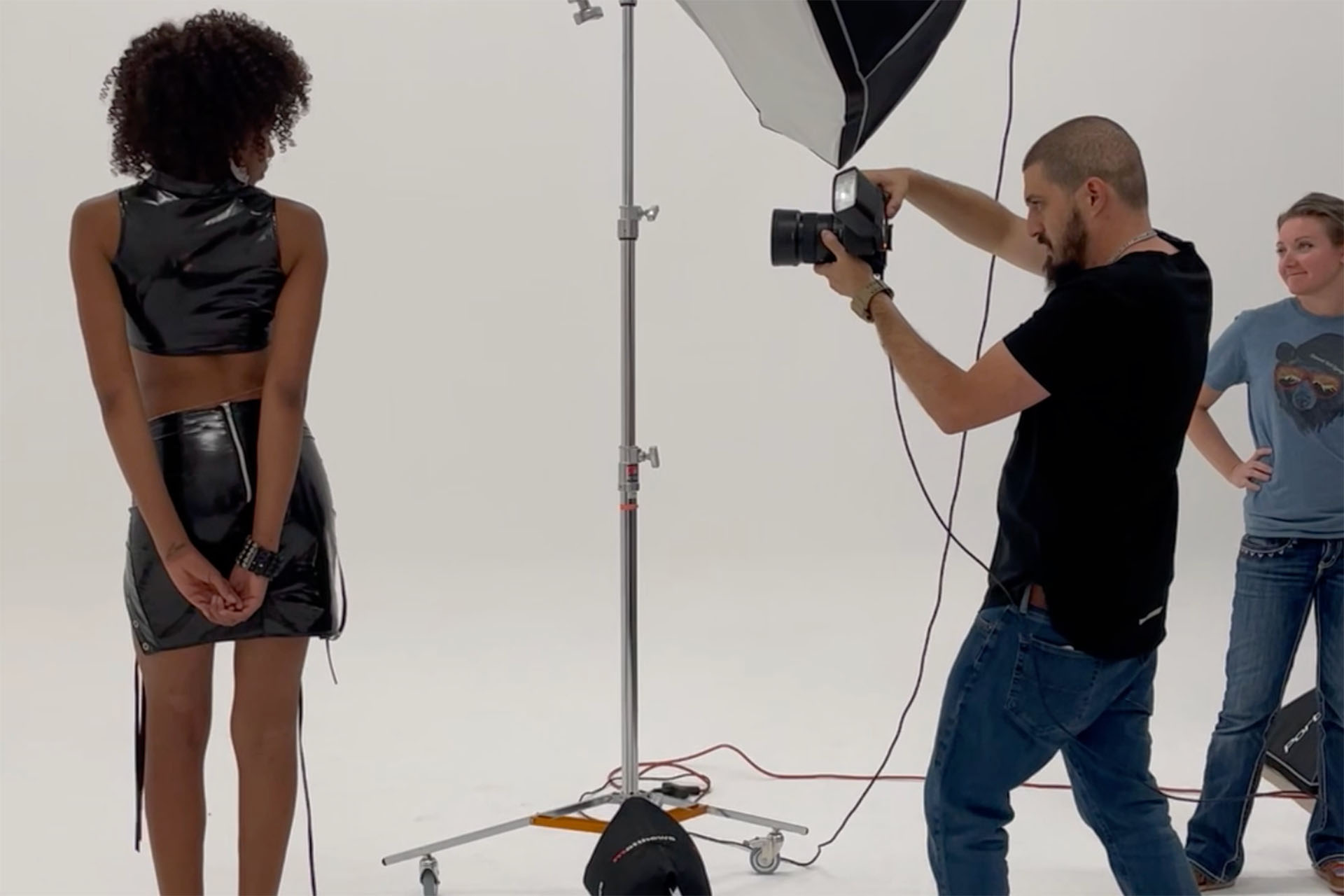
We shoot four standard angles: clean headshot, three-quarter, full body, profile. If your agency's format calls for a couple of range shots — one smile, one neutral — we grab those too. That's the whole list. I'm not going to burn an hour chasing fifty variations you'll never use.
The lighting is flat and even, on purpose. No mood, no drama, no shadows carving up your face. That's a different job — the one I do for your portfolio, not this one. If a photographer hands you moody, high-contrast comp card images, they're optimizing for their reel, not your booking rate.
Four accurate shots beat forty options. Nobody's casting off your best angle out of fifty; they're casting off whether you match what they need.

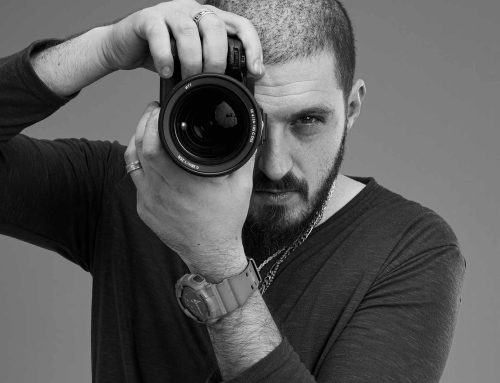
On set — Miller Visual Media, Littleton
04After the shoot
You'll see the full gallery, not just the four I expect we'll land on — occasionally something surprises us both. Retouching is light on purpose: skin evenness, color correction, nothing that reshapes you. A card that doesn't match the person who walks into a casting is worse than no card at all.
If your agency has an exact template or size spec, send it before the shoot. It's a two-minute email that saves both of us a round of edits later.
If you're prepping for your first comp card, or your agency just asked for an updated one, ask me your questions before you book. No upsell, no pressure — I'd rather you show up knowing what you're getting.
— Robert